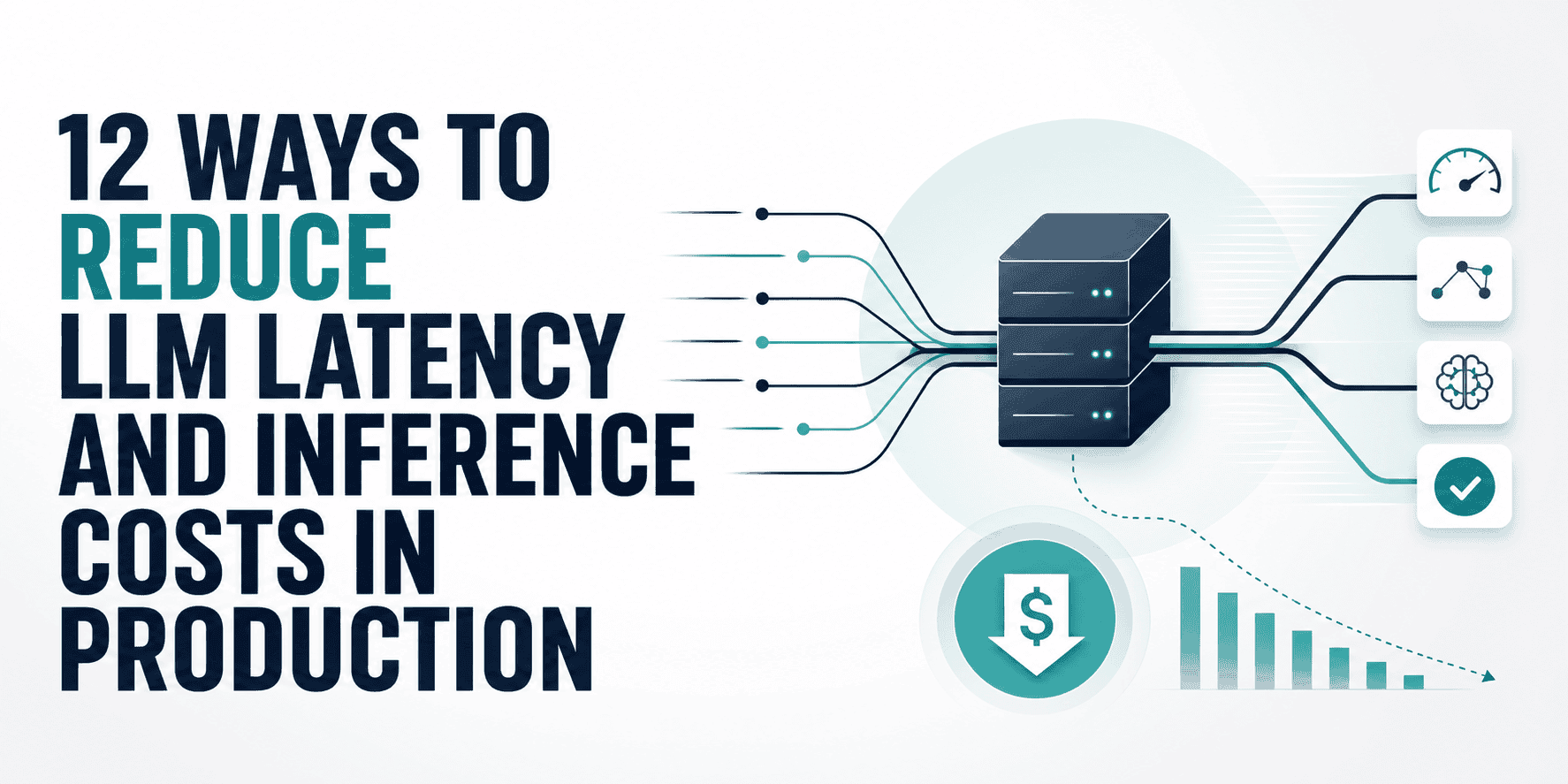
12 Ways to Reduce LLM Latency and Inference Costs in Production
Original Article Summary
Scaling LLMs isn’t about adding GPUs. It’s about removing wasted work from every request.
Read full article at Kdnuggets.com✨Our Analysis
KDNuggets' publication of "12 Ways to Reduce LLM Latency and Inference Costs in Production" highlights the importance of optimizing Large Language Models (LLMs) for efficient deployment. The article emphasizes that scaling LLMs is not just about adding more GPUs, but rather about eliminating unnecessary computations from every request. This insight has significant implications for website owners who are integrating LLMs into their platforms. By reducing LLM latency and inference costs, website owners can improve the overall user experience, increase the speed of AI-powered features, and decrease the financial burden associated with running these models. This is particularly crucial for websites with high traffic or those that rely heavily on AI-driven content generation, as optimized LLMs can help mitigate the risk of slow loading times and excessive computational costs. To take advantage of these optimizations, website owners can follow actionable tips such as monitoring and analyzing AI bot traffic to identify areas where LLM latency can be reduced, implementing efficient llms.txt files to streamline LLM requests, and exploring model pruning techniques to eliminate unnecessary computations and minimize inference costs.
Track AI Bots on Your Website
See which AI crawlers like ChatGPT, Claude, and Gemini are visiting your site. Get real-time analytics and actionable insights.
Start Tracking Free →