Agent Harness: Definition
Original Article Summary
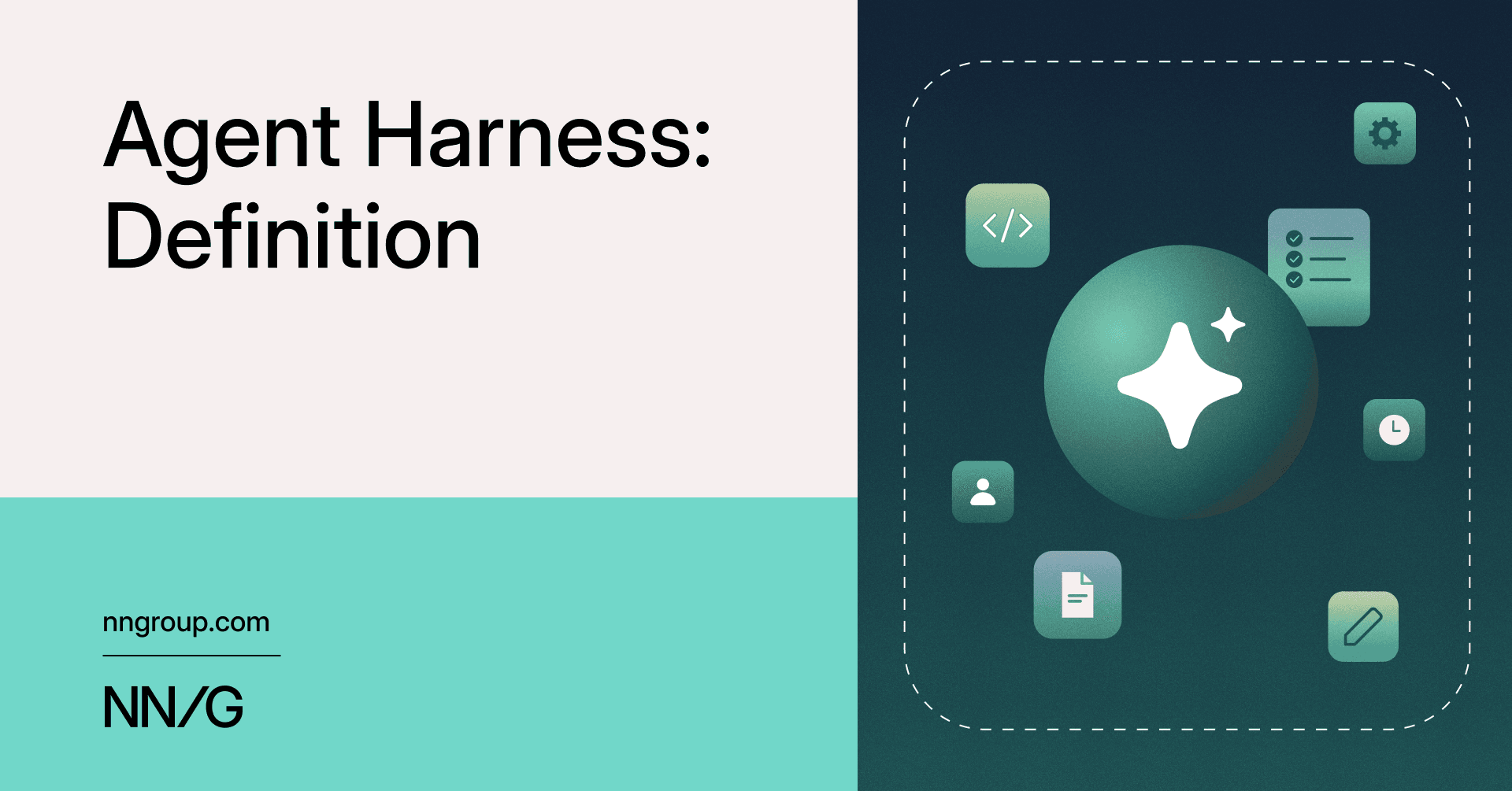
An agent harness manages a software loop between an AI model and its tools. Its context, permissions, and limits shape what users can do.
Read full article at Nngroup.com✨Our Analysis
Nielsen Norman Group's publication of an Agent Harness definition explains that it manages a software loop between an AI model and its tools, with context, permissions, and limits shaping what users can do. For website owners, this clarification signals that AI‑driven agents will soon operate with tighter, programmable boundaries rather than as uncontrolled crawlers. When a third‑party tool integrates an LLM via an agent harness, the tool can request specific site actions—such as form submissions or content extraction—based on the harness’s permission set. Consequently, sites may see a surge in sophisticated bot traffic that mimics genuine user interactions, potentially bypassing traditional bot filters and affecting analytics, SEO, and resource usage. **Actionable tips:** 1. Update your llms.txt to explicitly list allowed or disallowed agent harness identifiers (e.g., `User-Agent: *AgentHarness*` `Disallow: /private/`). 2. Deploy behavioral monitoring that flags rapid context‑switching requests typical of harness loops, and route them to a challenge or rate‑limit. 3. Use a sandboxed API gateway to enforce the permissions defined in the harness, ensuring only authorized tool calls reach sensitive endpoints.
Track AI Bots on Your Website
See which AI crawlers like ChatGPT, Claude, and Gemini are visiting your site. Get real-time analytics and actionable insights.
Start Tracking Free →