
Agents struggle with the same bad UX we do
Original Article Summary
Computer-use agents can’t guess, improvise, or ask a coworker. That makes them the most honest usability testers we’ve ever had.
Read full article at Uxdesign.cc✨Our Analysis
UX Design's article “Agents struggle with the same bad UX we do” highlights that computer‑use agents—AI bots designed to navigate websites—cannot guess, improvise, or ask a coworker, making them brutally honest usability testers. For website owners this means AI agents will now expose friction points that human visitors might gloss over, such as ambiguous navigation labels, hidden form fields, or inconsistent error messaging. Because these agents follow strict, deterministic paths, any broken link or poorly coded script will be flagged instantly, potentially inflating bot‑generated error logs and skewing analytics if not separated from genuine user traffic. **Actionable tips:** 1. **Segment AI‑agent traffic in your analytics** by adding a distinctive user‑agent string (e.g., `AI‑UXAgent/1.0`) to your `llms.txt` file and configuring your analytics platform to filter it out of human‑user reports. 2. **Deploy a dedicated “bot‑only” sitemap** referenced in `llms.txt` that lists test‑only pages (e.g., `/test‑login`, `/sandbox‑checkout`). This lets agents crawl and report UX flaws without contaminating SEO or user‑experience metrics. 3. **Monitor error‑rate spikes** for the AI‑agent user‑agent; set up alerts when the agent encounters a 4xx/5xx response, so you can address critical usability bugs before real users encounter them.
Track AI Bots on Your Website
See which AI crawlers like ChatGPT, Claude, and Gemini are visiting your site. Get real-time analytics and actionable insights.
Start Tracking Free →Related Articles
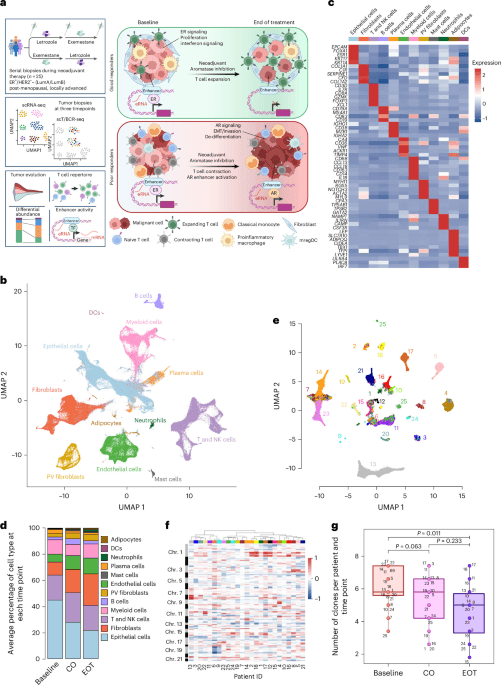
Longitudinal single-cell profiling of breast tumors highlights immune and epigenetic mechanisms associated with sensitivity to aromatase inhibitors
11/4/2026

I tested the RedMagic 12 Pro – and it’s the fastest Android I’ve ever seen
11/3/2026

RedMagic 12 Pro brings its RGB liquid cooling and 185Hz screen to the global market
11/3/2026