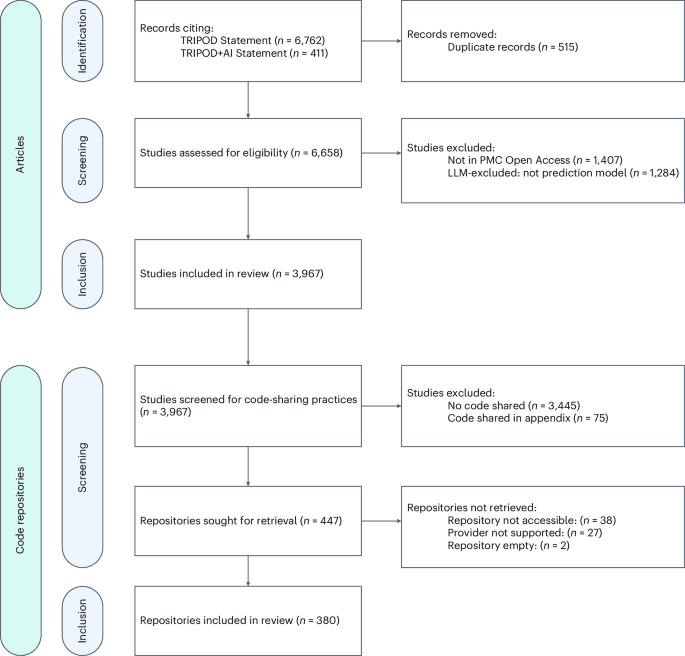
AI-assisted scoping review of code sharing in clinical prediction model research
Original Article Summary
An analysis of code availability in the open-access published literature shows that code sharing in clinical prediction models remains limited and reveals significant variability in practices and documentation quality.
Read full article at Nature.com✨Our Analysis
The study’s finding that “code sharing in clinical prediction models remains limited and reveals significant variability in practices and documentation quality” underscores a growing gap between open‑access research and the reproducibility tools AI developers rely on. For website owners hosting scientific repositories, medical blogs, or data portals, this signals an impending rise in AI bots that will crawl for any available code snippets to train predictive‑model generators. Inconsistent documentation and sparse licensing will make it harder to filter legitimate scholarly traffic from opportunistic scrapers that harvest code for commercial AI products. Consequently, owners must anticipate higher bot‑generated requests, potential copyright concerns, and the need for clearer usage policies around shared code. **Actionable steps:** 1. **Update your llms.txt** to explicitly declare how AI bots may access code files—e.g., `User‑Agent: *; Disallow: /code/; Allow: /code/open‑license/`. 2. **Deploy bot‑tracking analytics** (such as llmscentral’s traffic monitor) to differentiate scholarly crawlers from aggressive data‑mining bots, setting rate limits for the latter. 3. **Add machine‑readable licensing metadata** (e.g., SPDX identifiers) to each code artifact, enabling bots to respect usage rights and reducing inadvertent infringement.
Related Topics
Track AI Bots on Your Website
See which AI crawlers like ChatGPT, Claude, and Gemini are visiting your site. Get real-time analytics and actionable insights.
Start Tracking Free →