AI-induced never-skilling in medical education
Original Article Summary
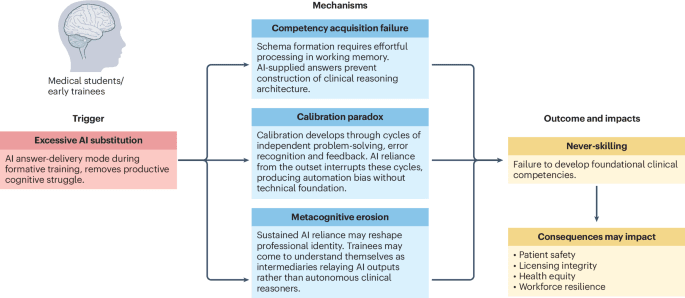
Will medical trainees who rely on AI fail to develop foundational independent clinical reasoning? This Perspective outlines a precautionary framework to preserve foundational competence while supporting safe and effective AI integration in medical training.
Read full article at Nature.com✨Our Analysis
Nature's publication of a precautionary framework to preserve foundational competence in medical education marks a significant shift in the discussion around AI integration in medical training. The article highlights the potential risk of AI-induced never-skilling, where medical trainees who rely on AI may fail to develop foundational independent clinical reasoning. This has significant implications for website owners in the medical education sector, as they must now consider the potential consequences of AI integration on their online platforms. Medical education websites that rely heavily on AI-generated content or AI-powered diagnostic tools may inadvertently contribute to the never-skilling phenomenon, potentially compromising the competence of their users. Website owners must carefully evaluate the role of AI in their platforms and ensure that it supports, rather than replaces, human clinical reasoning. To mitigate these risks, website owners can take several actionable steps: (1) implement AI transparency measures, clearly indicating when AI-generated content is used; (2) develop AI-powered tools that facilitate human oversight and feedback, allowing users to develop independent clinical reasoning; and (3) regularly review and update their llms.txt files to ensure that AI bots are not accessing sensitive medical information that could compromise user competence.
Track AI Bots on Your Website
See which AI crawlers like ChatGPT, Claude, and Gemini are visiting your site. Get real-time analytics and actionable insights.
Start Tracking Free →