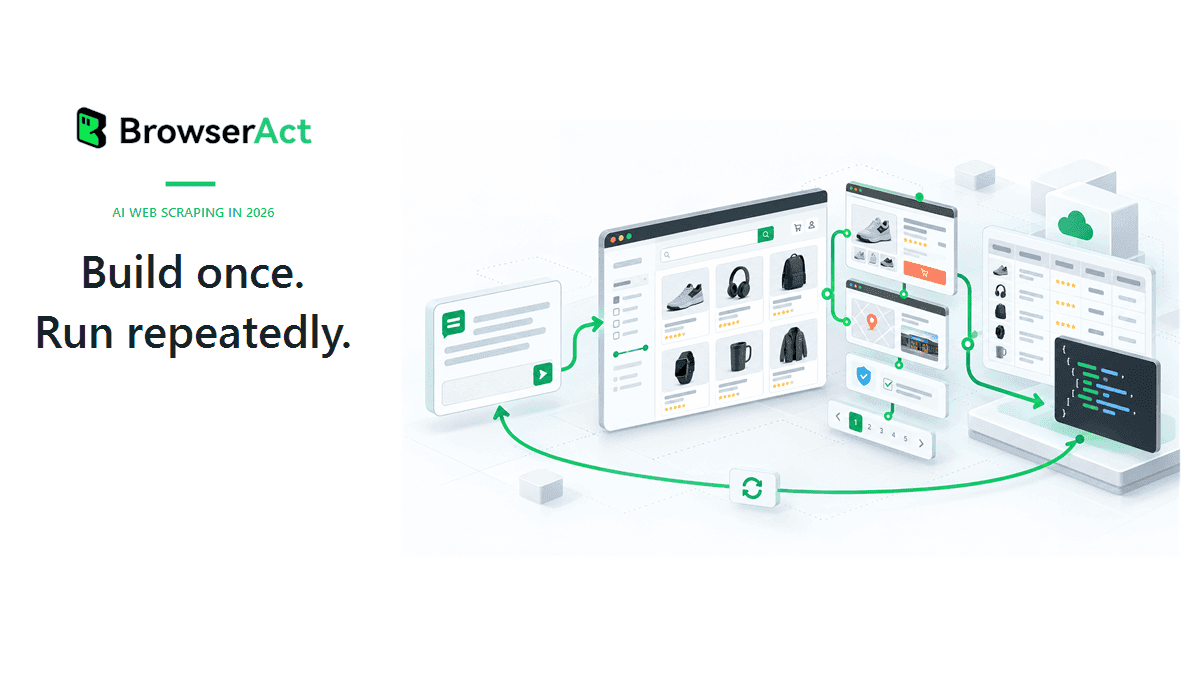
BrowserAct AI Web Scraper in 2026: Build Once, Run Repeatedly
Original Article Summary
Describe your data needs in plain language and turn websites into a continuous source of fresh data.
Read full article at Kdnuggets.com✨Our Analysis
BrowserAct AI's launch of its BrowserAct AI Web Scraper, which lets users describe data needs in plain language and then continuously harvest fresh site content, marks a pivotal shift toward low‑code, repeatable web scraping for 2026. For website owners, this means a surge in automated, intent‑driven crawlers that can mimic human browsing patterns without requiring custom code. Because the scraper can be instructed to “run repeatedly,” sites may see higher frequencies of bot traffic that bypass traditional user‑agent blocks, potentially inflating analytics and straining server resources. Moreover, the plain‑language interface lowers the barrier for non‑technical competitors to extract proprietary content, raising concerns over data privacy and intellectual property. **Actionable tips:** 1. **Update your llms.txt** to explicitly list BrowserAct AI’s crawler name (e.g., `User-Agent: BrowserActAI/2026`) and define allowed/disallowed paths, ensuring the scraper respects your site’s data policies. 2. **Deploy real‑time bot detection** that flags repeated requests from identical IP ranges or patterns matching BrowserAct AI’s request headers, allowing you to throttle or challenge suspicious activity. 3. **Monitor traffic spikes** in your analytics dashboard and set alerts for abnormal repeat visits, so you can quickly assess whether the scraper is impacting performance or violating your terms of service.
Track AI Bots on Your Website
See which AI crawlers like ChatGPT, Claude, and Gemini are visiting your site. Get real-time analytics and actionable insights.
Start Tracking Free →