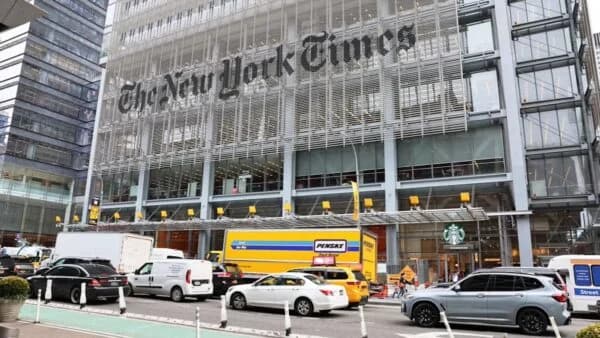
New York Times, Chicago Tribune Sue Tech Company Brave Over AI Copyright Claims
Original Article Summary
New York Daily News and Orlando Sentinel further allege their reporting was taken without permission or payment The post New York Times, Chicago Tribune Sue Tech Company Brave Over AI Copyright Claims appeared first on TheWrap.
Read full article at TheWrap✨Our Analysis
Brave's exposure to lawsuits from the New York Times, Chicago Tribune, New York Daily News and Orlando Sentinel over alleged unauthorized use of their reporting in Brave’s AI‑driven search and summarization features marks a watershed moment for publishers confronting AI‑powered content scraping. For website owners, the litigation signals that AI crawlers that ingest full articles for summarization can now be treated as copyright infringers, not merely data harvesters. This raises the risk that any bot accessing your site to generate AI answers could trigger legal exposure if it reproduces protected text without permission. Expect tighter enforcement of “no‑AI‑scraping” clauses, increased DMCA takedown activity, and potentially new industry standards for attribution or licensing of AI‑generated excerpts. **Actionable steps:** 1. **Update your llms.txt** to explicitly disallow AI‑focused crawlers (e.g., “User‑Agent: *AI‑Bot* Disallow: /”) and include a clear copyright notice referencing the lawsuits. 2. **Deploy bot‑detection scripts** that flag high‑frequency requests from known AI services (e.g., Brave’s “Brave‑Search” user‑agent) and route them to a verification page requiring API keys or payment. 3. **Monitor traffic logs** for anomalous summarization patterns—short, repeated fetches of article bodies—and use a CAPTCHA or rate‑limit rule to deter automated content extraction before it reaches your servers.
Track AI Bots on Your Website
See which AI crawlers like ChatGPT, Claude, and Gemini are visiting your site. Get real-time analytics and actionable insights.
Start Tracking Free →