
A cognitive layer architecture to support large-language model performance in psychotherapy interactions
Original Article Summary
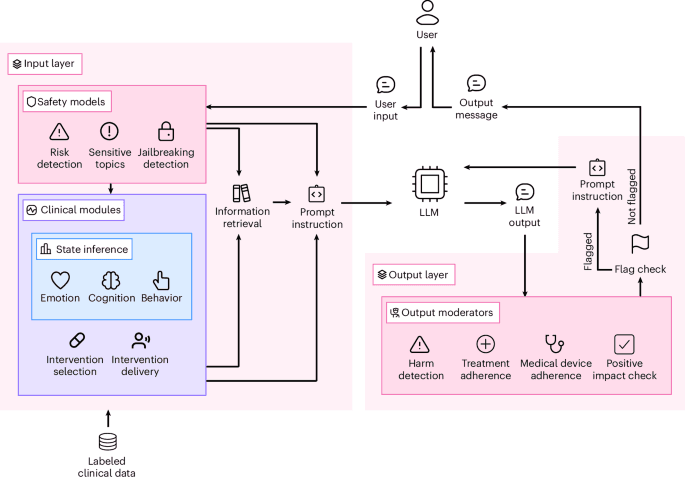
A real-world study showed that introducing a cognitive layer architecture to support specialized psychotherapeutic reasoning capabilities in general-purpose chatbots improved depression and anxiety symptoms compared to chatbots or therapists alone.
Read full article at Nature.com✨Our Analysis
Nature's publication of a study on a cognitive layer architecture to support large-language model performance in psychotherapy interactions, which showed improved depression and anxiety symptoms, marks a significant breakthrough in AI-assisted therapy. This development has implications for website owners who offer mental health resources or support groups, as it suggests that integrating AI chatbots with cognitive layer architecture could enhance the effectiveness of their online support services. Website owners may consider leveraging this technology to provide more personalized and specialized support to their users, potentially leading to better outcomes and increased user engagement. To capitalize on this trend, website owners can take several actionable steps: first, monitor AI bot traffic to their mental health resources to identify areas where cognitive layer architecture could be integrated; second, review their llms.txt files to ensure that AI chatbots are properly configured to handle sensitive topics like depression and anxiety; and third, explore partnerships with AI developers who specialize in cognitive layer architecture to stay ahead of the curve in AI-assisted therapy.
Related Topics
Track AI Bots on Your Website
See which AI crawlers like ChatGPT, Claude, and Gemini are visiting your site. Get real-time analytics and actionable insights.
Start Tracking Free →