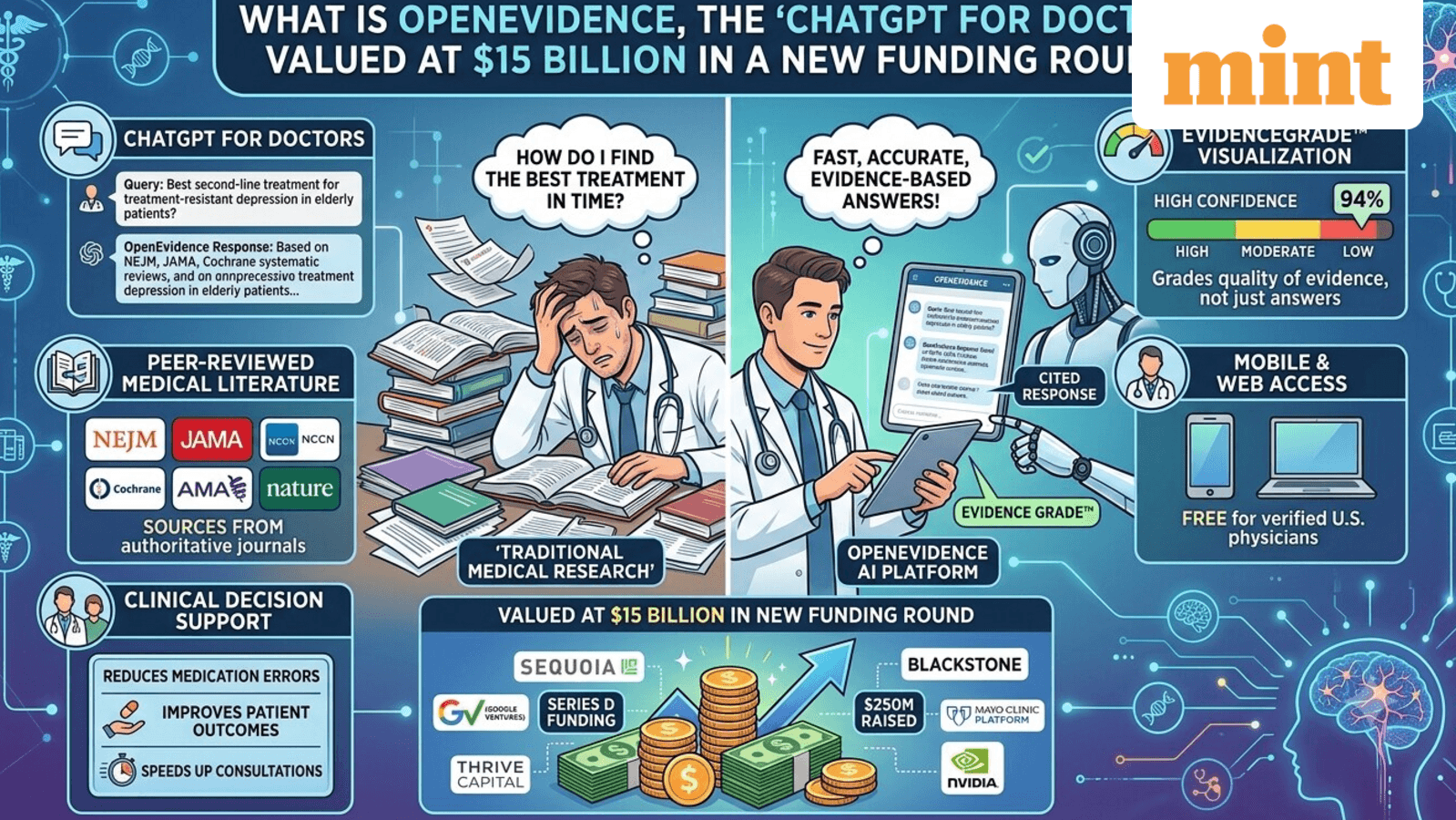
What is OpenEvidence, the ‘ChatGPT for doctors’ valued at $15 billion in a new funding round?
Original Article Summary
OpenEvidence, valued at $15 billion, is deploying its AI search engine for doctors in 100 countries, enhancing medical knowledge access.
Read full article at Livemint✨Our Analysis
OpenEvidence's launch of its AI‑powered medical search engine for doctors across 100 countries, backed by a $15 billion valuation, signals a rapid expansion of specialized large‑language‑model services into niche professional domains. For website owners, especially those running health‑related portals, this development means a new class of high‑volume, purpose‑built AI bots will begin crawling and querying site content to feed clinical queries. Unlike generic crawlers, these bots will target precise medical terminology, guidelines, and research articles, potentially increasing traffic spikes during health crises or new guideline releases. Their queries can also surface content that may be repurposed in AI‑driven diagnostic tools, raising concerns about data licensing and attribution. **Actionable tips:** 1. **Update your llms.txt** to explicitly list OpenEvidence’s crawler user‑agents (e.g., `OpenEvidenceBot/1.0`) and set appropriate crawl‑delay or disallow rules for sensitive patient data pages. 2. **Implement bot‑traffic monitoring** in llmscentral.com to differentiate OpenEvidence’s request patterns (frequent, keyword‑rich GETs) from regular search engine bots, enabling you to throttle or block excessive scraping. 3. **Audit your medical content licensing** and embed clear usage policies in metadata so that AI services like OpenEvidence can respect attribution requirements while you retain control over proprietary information.
Related Topics
Track AI Bots on Your Website
See which AI crawlers like ChatGPT, Claude, and Gemini are visiting your site. Get real-time analytics and actionable insights.
Start Tracking Free →